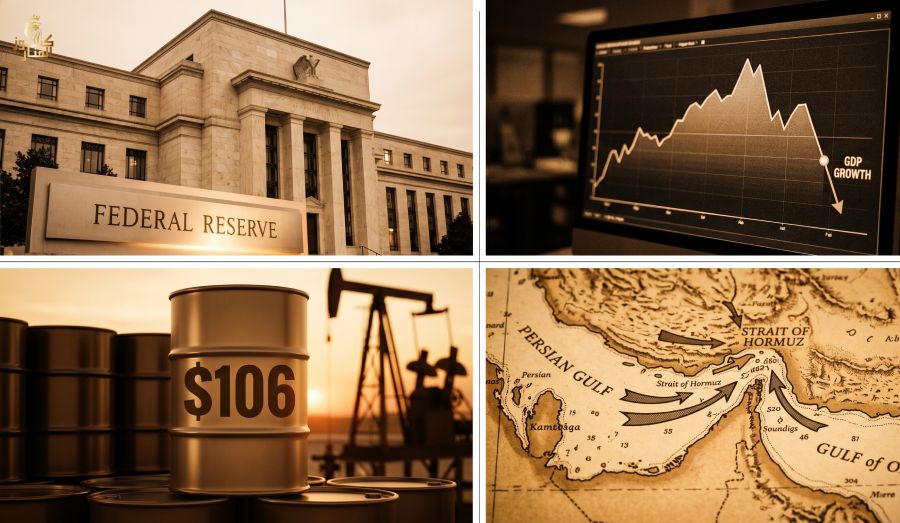
Rarely does one week contain this much market-moving information. As Monday April 27 opens with gold just above $4,710 per ounce, the world's most closely watched economic events are stacked into the next four days. By Friday, the gold market will have been forced to digest a Federal Reserve rate decision, Jerome Powell's final press conference as chair, Q1 US GDP data, and the daily drumbeat of news from the Strait of Hormuz — where Brent crude is now above $106 per barrel and both blockades, American and Iranian, remain firmly in place.
The inflation picture is the defining factor this week. The University of Michigan's final April inflation expectations reading came in at 4.8% — a full percentage point above March, the biggest single-month jump since April 2025. That number matters because it feeds directly into the Fed's decision framework. When households expect prices to keep rising, they demand wage increases, companies raise prices preemptively, and actual inflation follows expectations upward. The Fed is acutely aware of this psychology. PCE core inflation already stood at 3.1% in January and has not fallen since. With oil at $106, April's PCE reading — due later in the month — could be significantly higher.
Into this environment, J.P. Morgan published a research note last week that stopped markets cold: the bank now projects the Fed's next rate move could be a hike of 25 basis points in Q3 2027 — not a cut. This would be the first hike since rates peaked. The same J.P. Morgan holds gold price targets of $6,000 to $6,300 for end 2026. They are not contradicting themselves: in a world where energy-driven inflation is persistent and geopolitical instability is structural, gold rises even when rates rise, because the risk is inflation itself destroying purchasing power.
Chair Powell speaks Wednesday. Every sentence will matter. Gold near $4,710 is the market's position before the verdict.